

What is Light Pollution? How to Find Dark Skies Near You
You just got your first telescope. You set it up in the backyard, point it at the sky, and... it's kind of disappointing. The stars look fuzzy, everything has an orange tint, and you can barely find anything. Light pollution is almost certainly the culprit — and you're far from alone.
More than 80% of Americans can't see the Milky Way from where they live. In major cities like New York, Los Angeles, Chicago, and Houston, the night sky glows so brightly from artificial light that only the Moon, a handful of planets, and a few dozen stars are visible. If this sounds familiar, this guide will explain exactly what's happening, what you can still enjoy from home, and how to find a truly dark sky within a reasonable drive.
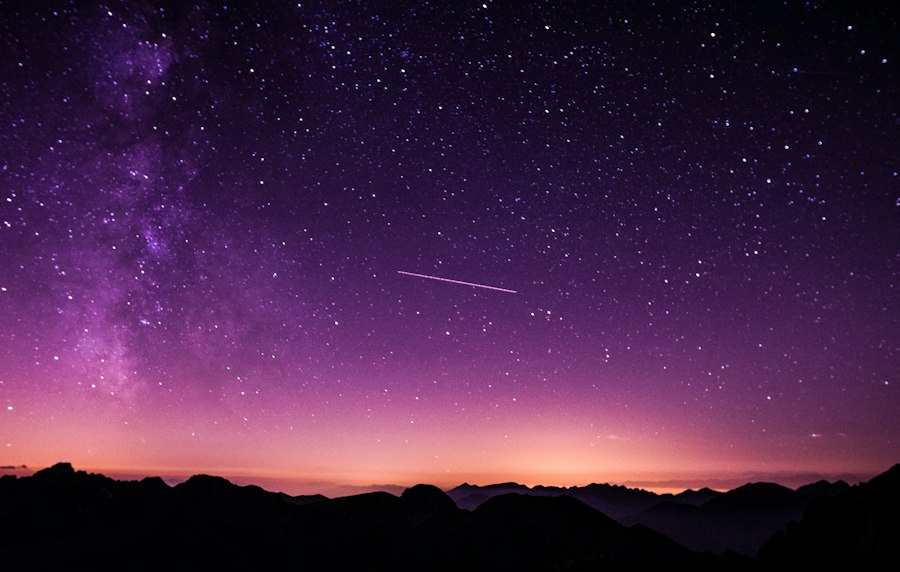
The difference between a city sky and a dark sky site is staggering — thousands more stars snap into view.
What is Light Pollution?
Light pollution is the result of excessive, misdirected, or unnecessary artificial light from human sources — streetlights, buildings, parking lots, billboards, stadiums, and industrial facilities. Instead of pointing light only where it's needed (downward), much of it escapes sideways and upward into the atmosphere. There, it scatters off dust and moisture particles, creating a diffuse orange or white glow above populated areas known as skyglow.
Light pollution has four main forms:
- Skyglow — The bright dome of light over a city or town visible for dozens of miles. This is the main enemy of stargazing. Even a small town can create skyglow visible 20–30 miles away.
- Glare — Excessive brightness from a single source (like stadium lights or security floodlights) that causes visual discomfort and prevents your eyes from adapting to the dark.
- Light trespass — Light that spills where it's not wanted or needed, like a neighbor's floodlight shining into your yard or bedroom window.
- Clutter — Confusing, overlapping clusters of lights from signs, decorations, and commercial areas that disrupt the visual environment and the night sky.
The United States is one of the most light-polluted countries on Earth. The eastern seaboard from Boston to Washington D.C. is almost entirely lit up, with little break in between. Major metro areas like Los Angeles, Chicago, Dallas, Atlanta, and Phoenix each create skyglow that's visible hundreds of miles into the surrounding desert or farmland.
How Light Pollution Affects Your Stargazing
The science is straightforward: your eyes adapt to darkness over 20–30 minutes, a process called dark adaptation. During this process, your pupils dilate and your eyes switch from cone-based (color, daytime) vision to rod-based (low-light, high-sensitivity) vision. From a fully dark sky, you can detect incredibly faint objects this way.
Light pollution short-circuits this. Even a faint ambient glow keeps your eyes partially in daytime mode. The practical result:
- From a dark sky (Bortle 2): You can see 4,500–5,000 stars with the naked eye. The Milky Way is bright enough to cast a faint shadow. Faint galaxies pop without a telescope.
- From a suburban sky (Bortle 6): You can see about 400–600 stars. The Milky Way is barely a faint smudge. Deep-sky objects are washed out.
- From a city sky (Bortle 9): You can see fewer than 50 stars — mostly just the very brightest, like Orion's belt, Sirius, and Vega. The Milky Way is completely invisible.
The Bortle Scale: How Dark Is Your Sky?
The Bortle Scale is the standard rating system for night sky darkness, running from 1 (the darkest possible sky) to 9 (the brightest, most light-polluted city core). It was developed by amateur astronomer John Bortle and published in Sky & Telescope magazine in 2001. Here's what each level means for what you can actually see:
- Bortle 1 — Excellent Dark Sky: The Milky Way is so bright it casts a visible shadow. Zodiacal light is obvious. The galaxy M33 (Triangulum) is visible to the naked eye. Found only in the most remote locations in the U.S. — think the Nevada desert, the backcountry of Big Bend, or rural Wyoming.
- Bortle 2 — Truly Dark Sky: Similar to Bortle 1. Airglow (a natural sky glow from Earth's atmosphere) may be visible. The Milky Way shows tremendous detail and structure. Very few places in the continental U.S. reach this level.
- Bortle 3 — Rural Sky: The Milky Way is complex and clearly structured. Some light pollution is visible on the horizon toward nearby towns. M33 is still visible to the naked eye with averted vision. This is the minimum target for serious deep-sky observing. Reachable within 1–2 hours of most mid-sized American cities.
- Bortle 4 — Rural/Suburban Transition: The Milky Way is still clearly visible but lacks fine detail. Light pollution domes appear on horizons in the direction of nearby cities. Still excellent for most visual deep-sky objects. A realistic target for a night drive from major metro areas.
- Bortle 5 — Suburban Sky: The Milky Way is visible but faint, especially near the horizon. Globular clusters like M13 are still impressive. Most bright nebulae and galaxies are accessible. This describes the outskirts of many American cities and suburban areas.
- Bortle 6 — Bright Suburban Sky: The Milky Way is only visible near the zenith. Light pollution makes the horizon glow noticeably. Globular clusters and planetary nebulae still look good through a telescope. Typical for the inner suburbs of cities like Atlanta, Denver, or Minneapolis.
- Bortle 7 — Suburban/Urban Transition: The Milky Way is barely visible or invisible. Only the brightest deep-sky objects are detectable through a telescope. Typical for close-in suburbs of major cities.
- Bortle 8 — City Sky: No Milky Way. Only the brightest stars and a handful of deep-sky showpieces are usable. The Moon, planets, and double stars are still excellent. Typical for urban neighborhoods in cities like Dallas, Phoenix, or Seattle.
- Bortle 9 — Inner City: The sky is so bright you might not even need a flashlight. Only the very brightest stars and planets are visible. This is your view from downtown Manhattan, Chicago's Loop, or the Las Vegas Strip.
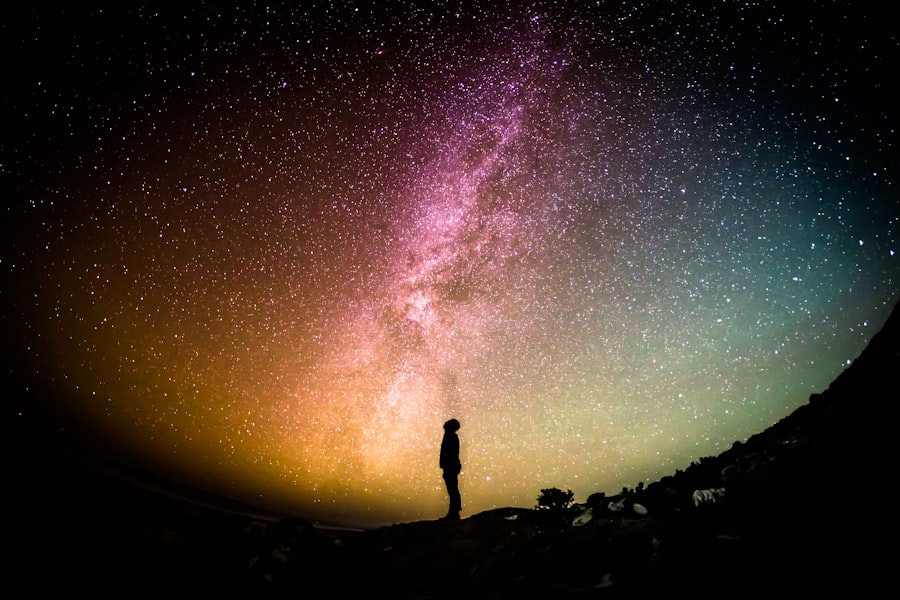
The Milky Way core, visible from Bortle 3 or darker skies — this is what awaits a short drive from most American cities.
How to Find Dark Skies Near You
The good news: most Americans are within a 1–2 hour drive of reasonably dark skies (Bortle 4–5). Here are the best tools to find them:
Light Pollution Map (lightpollutionmap.info) — The single best tool for planning dark sky trips. It shows a color-coded overlay of light pollution levels based on satellite data from NOAA. Dark blue and black areas represent Bortle 3 or lower. Green and yellow are Bortle 4–5. Anything orange or red is Bortle 6 or worse. Simply zoom into your area, find the nearest dark patch, and check the driving distance.
International Dark-Sky Association (DarkSky.org) — Formerly the IDA, DarkSky International certifies official Dark Sky Parks, Reserves, Sanctuaries, and Communities across the United States and around the world. Every certified location has been verified to meet specific darkness standards. Many are in national or state parks with free or low-cost access. Their searchable map is a great starting point if you want a guaranteed-dark destination.
Stellarium or SkySafari apps — These free planetarium apps don't show light pollution levels, but they're essential for knowing what's in the sky once you get there. Enter your location and they'll show you exactly where every planet, constellation, and deep-sky object is right now. Great for planning what to observe before you head out.
Clear Outside app — Light pollution is only half the battle. Clouds and atmospheric turbulence (called "seeing") can ruin a perfectly planned night. Clear Outside shows cloud cover, transparency, humidity, and astronomical seeing conditions hour by hour at your exact location. Always check this before driving an hour to a dark sky site.
Globe at Night (globeatnight.org) — A citizen science project run by NOIRLab where you submit observations of your local night sky brightness. The crowdsourced data helps refine global light pollution maps over time. It's also a great way to measure your exact Bortle level at home.
Top Dark Sky Parks in the United States
The U.S. has some of the best dark sky destinations in the world — from desert parks in the Southwest to remote forests in the Appalachians. Here are some of the most acclaimed:
- Cherry Springs State Park — Pennsylvania: Often called the best dark sky site east of the Mississippi. Located in north-central Pennsylvania, roughly 3 hours from Philadelphia or New York, it's one of the few Bortle 2 sites on the East Coast. The park has a dedicated stargazing field open to the public.
- Big Bend National Park — Texas: With some of the darkest skies in the lower 48 states, Big Bend is a premier destination for Texas stargazers. The park encompasses over 800,000 acres with minimal nearby development, giving Bortle 2–3 skies in most areas.
- Death Valley National Park — California: One of the largest and most remote national parks in the country, Death Valley is an International Dark Sky Park with Bortle 1–2 skies in its interior. Also notable for its unique landscapes that make for stunning foreground astrophotography.
- Natural Bridges National Monument — Utah: The world's first designated International Dark Sky Park (2007). Located in the remote canyon country of southeastern Utah, it regularly records Bortle 2 readings.
- Chaco Culture National Historical Park — New Mexico: Combines ancient Native American ruins with some of the darkest skies in New Mexico. Astronomers of the Ancestral Puebloans used these same skies thousands of years ago. Bortle 2–3.
- Headlands International Dark Sky Park — Michigan: The best dark sky destination in the Midwest, located near Mackinaw City in northern Michigan. Bortle 3 skies accessible from Chicago or Detroit with an overnight drive.
- Great Basin National Park — Nevada: One of the least-visited national parks, offering Bortle 2 skies at high elevation (the visitor center sits at 6,825 feet). Far from Las Vegas light pollution in central Nevada.
Get Your Free Beginner Stargazing Starter Guide
Join thousands of beginner astronomers. Weekly tips, gear guides, and dark sky location recommendations — no spam, unsubscribe any time.
What Can You See Despite Light Pollution?
Light pollution is frustrating, but it doesn't mean your telescope is useless at home. Even from a Bortle 7–8 suburban backyard, you can have incredible views of:
- The Moon — Stunning from any sky condition. A mid-size telescope at 100–150x magnification reveals craters, mountain ranges, and lava plains in breathtaking detail. The Moon is actually better viewed before full moon, when shadows along the terminator (the day/night line) make features pop.
- The Planets — Jupiter's cloud bands, Great Red Spot, and four Galilean moons are clearly visible from a city. Saturn's rings are jaw-dropping at almost any magnification. Mars shows polar ice caps and surface markings during oppositions. Venus shows phases like a tiny moon.
- Double Stars — Light pollution has almost no effect on double stars. Albireo in Cygnus (a gold-and-blue pair) is one of the most beautiful objects in the sky and looks spectacular even from downtown. Mizar & Alcor in the Big Dipper handle are another great target.
- Star Clusters — Bright open clusters like the Pleiades (Seven Sisters), the Beehive Cluster (M44), and the Double Cluster in Perseus are visible even from suburbs. Globular clusters like M13 in Hercules hold up well too.
- The Orion Nebula (M42) — The brightest nebula in the sky, visible even from a city with binoculars and stunning through a telescope. A light pollution filter can improve it further from suburban skies.
Tips for Getting the Most From Light-Polluted Skies
Let your eyes dark-adapt. Stay away from white lights (including your phone screen!) for at least 20–30 minutes before and during observing. Use a red flashlight — red light doesn't disrupt dark adaptation. This single habit makes a bigger difference than most beginners expect.
Observe during new moon. A full moon is as bad as moderate light pollution — it washes out faint objects across the whole sky. Plan your best observing sessions around the new moon phase each month, when the moon is below the horizon for most of the night.
Wait for astronomical twilight. Even on clear nights, the sky isn't fully dark until about 90 minutes after sunset in summer (shorter in winter). Jumping outside right at dusk means you're fighting twilight glow, not just city light.
Point away from the brightest glow. If your city lights glow mostly to the south, try observing targets to the north or overhead. The overhead zenith is almost always your darkest patch of sky.
Try a light pollution filter. Narrowband nebula filters (like the Optolong L-eNhance or SVBONY UHC) block the specific orange wavelengths of LED and sodium streetlights while passing the light emitted by nebulae. They can dramatically improve views of emission nebulae like M42, M8, M20, and M57 from suburban skies.
Do Light Pollution Filters Actually Work?
Yes — with important caveats. Light pollution filters are designed primarily for emission nebulae — objects that emit their own light at specific wavelengths (mostly hydrogen-alpha and oxygen-III). When you put a narrowband filter in your eyepiece, it blocks the broadband glow from city lights while passing the narrowband light from the nebula. The result is a dramatically darker background sky with the nebula standing out much more clearly.
What filters don't help with: galaxies, star clusters, and reflection nebulae. These objects reflect broadband light from stars, which means the filter blocks their light just as much as it blocks the sky glow. For galaxies, your best option is still to drive to a dark site.
If you're observing from a Bortle 6–8 sky and your main targets are nebulae, a quality light pollution filter is one of the best accessory investments you can make. Look for UHC (ultra high contrast) or dual-narrowband filters that pass both Hα and OIII wavelengths for visual use.
Frequently Asked Questions
What is light pollution and why does it matter for stargazing?
Light pollution is excessive, misdirected artificial light from cities, highways, and businesses that scatters in the atmosphere, creating a bright sky glow that washes out stars. In a typical U.S. city you might see only 100–200 stars; from a dark sky site, you can see 3,000–5,000. More than 80% of Americans live under skies too bright to see the Milky Way.
How do I find dark sky sites near me in the United States?
Use lightpollutionmap.info to find your nearest dark skies — look for areas rated Bortle 4 or lower within a reasonable drive. The International Dark Sky Association at darksky.org also lists certified Dark Sky Parks across the U.S., including Cherry Springs State Park (PA), Big Bend National Park (TX), and Death Valley National Park (CA).
What is the Bortle Scale?
The Bortle Scale rates night sky darkness from 1 (pristine dark sky) to 9 (inner city). Bortle 1–2 means the Milky Way casts visible shadows. Bortle 4–5 is a good rural sky where most deep-sky objects are visible through a telescope. Bortle 7–9 is a typical suburban or urban sky where only the Moon, planets, and brightest stars are easy to see.
Can I see the Milky Way from a U.S. city?
In most U.S. cities (Bortle 8–9), the Milky Way is completely invisible. A 45–90 minute drive from most major metros can reach Bortle 4–5 skies where the Milky Way becomes clearly visible. For the full stunning arch of the Milky Way core, you need Bortle 3 or darker — typically 1–2 hours outside large cities, or at certified dark sky parks like those listed above.
What can I see through a telescope despite light pollution?
Plenty! Even from a Bortle 7–8 suburban sky, you can get stunning views of the Moon, all the planets (Jupiter's moons, Saturn's rings, Mars's polar caps), double stars, open and globular star clusters, and bright nebulae like the Orion Nebula. Light pollution mainly limits views of faint galaxies and dim nebulae — but there's still a ton to explore from your backyard.
Do light pollution filters work?
Yes — for emission nebulae. Narrowband filters like UHC or dual-narrowband (Hα + OIII) filters block the orange glow from LED streetlights while passing the specific wavelengths emitted by nebulae, making them stand out dramatically against a darker background. They don't help with galaxies or star clusters, which reflect broadband light. For galaxy hunting, a drive to a dark sky site is the best solution.