Collection: Reflector Telescopes for Deep-Sky & Planetary Astronomy
📖 New to reflectors? Read our guide: Refractor vs. Reflector vs. Dobsonian
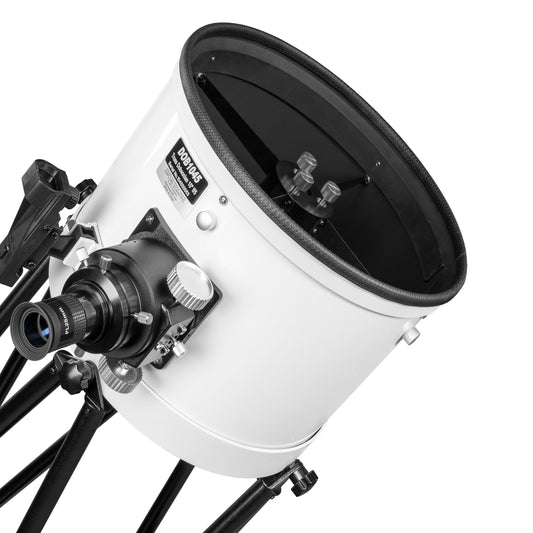
Reflector telescopes use mirrors instead of lenses to gather and focus light, which means they can offer significantly more aperture per dollar than refractors. More aperture means more light, which means brighter, more detailed views of faint objects like nebulae, galaxies, and star clusters.
For beginners who want to explore deep-sky objects beyond just the Moon and planets, a reflector is often the smartest investment. A 5-inch or 6-inch reflector will reveal objects that a 70mm or 80mm refractor simply can't detect.
What's the downside of reflector telescopes for beginners? Reflectors occasionally need collimation — a simple alignment process that keeps the mirrors properly positioned. It sounds technical, but it only takes a few minutes once you've done it once, and there are step-by-step guides to help.
Every reflector here is chosen for optical performance, build quality, and beginner-friendly design. Free shipping on qualifying orders. Ask our team if you need help choosing between a reflector and refractor.