Point, align, and let the mount do the work. The Explore Scientific Sidara Pro 102mm GoTo Refractor (ES-AR102660-SAGT-ST10) combines a 102mm f/6.5 achromatic refractor with the SkyAssist GoTo motorized mount — a fully computerized alt-az system that automatically slews to over 30,000 objects in its database. For the observer who wants maximum sky coverage without memorizing star charts or spending nights learning manual star-hopping, this is the telescope that removes every barrier between you and the night sky.
Unlike a manual refractor on an alt-az mount
Manual telescopes reward patience and learning — GoTo telescopes reward showing up. The SkyAssist mount removes the need to navigate with a finderscope, cross-reference charts, and nudge the telescope manually across the sky. After a two-star alignment that takes under five minutes, the mount tracks objects automatically and slews to new targets on command. The 102mm f/6.5 refractor (660mm focal length) is matched to this mount's payload capacity and delivers solid views on planets, the Moon, and brighter deep-sky objects. It's the same optical formula as our manual Sidara 102mm but with the mount doing all the work.
What you'll see
102mm at f/6.5 hits the sweet spot for all-around viewing. Jupiter's cloud belts, the Great Red Spot, and the four Galilean moons are crisp at medium magnification. Saturn's rings show the Cassini Division. The Moon is endlessly detailed. Brighter deep-sky objects — M42, M45, M13, M31 — are beautiful even under suburban skies, and the GoTo mount means you'll spend time looking, not searching. The 660mm focal length is long enough for focused planetary views and short enough for satisfying wide-field star cluster sweeps.
What's in the box
- 102mm f/6.5 achromatic refractor OTA
- SkyAssist GoTo motorized alt-az mount
- Tripod with accessory tray
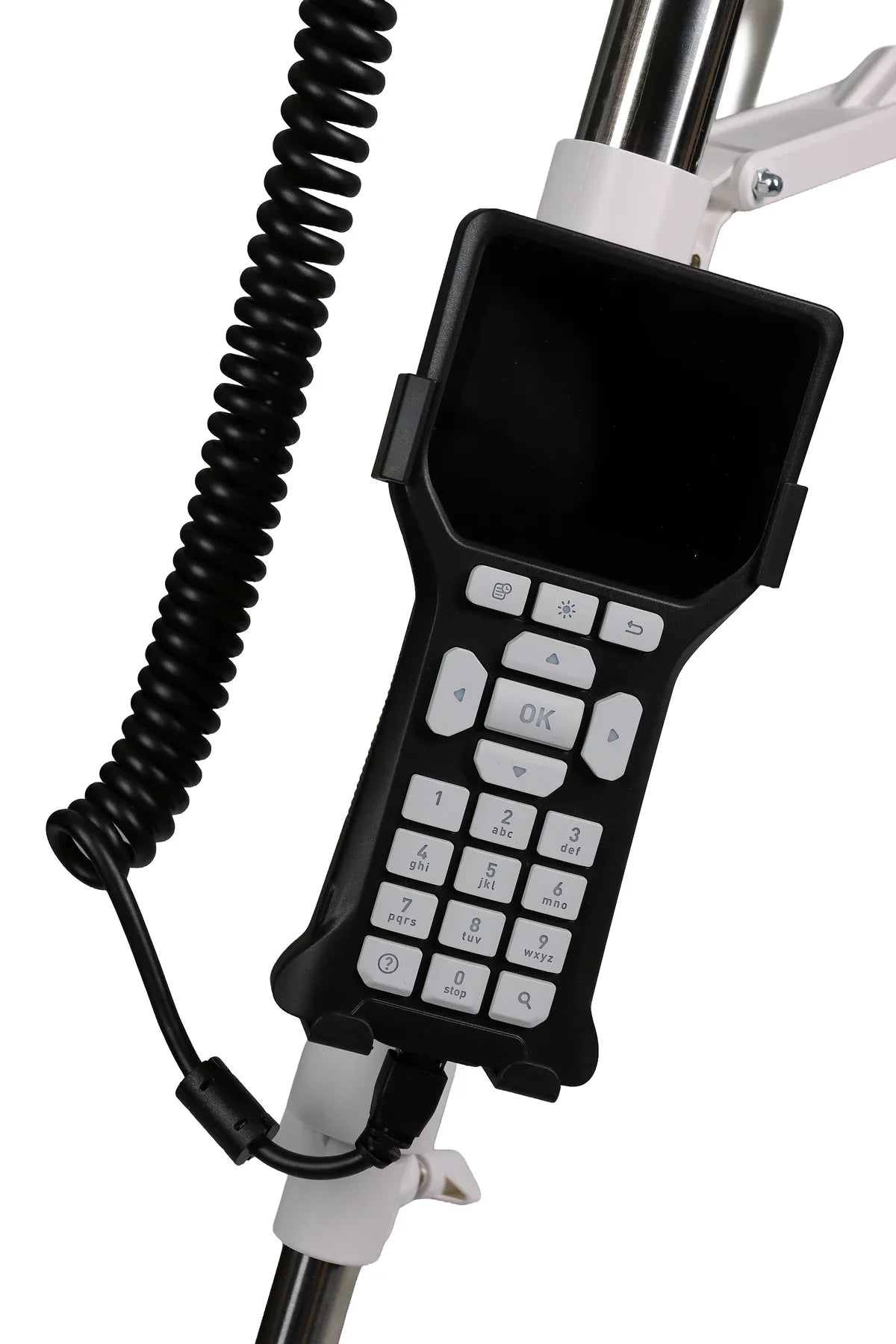
- Hand controller with 30,000+ object database
- 1.25-inch diagonal and eyepiece
- Red dot finderscope
| Spec |
Value |
| SKU |
ES-AR102660-SAGT-ST10 |
| Optical Design |
Achromatic Doublet Refractor |
| Aperture |
102mm (4 inches) |
| Focal Length |
660mm |
| Focal Ratio |
f/6.5 |
| Mount Type |
SkyAssist GoTo Motorized Alt-Az |
| Object Database |
30,000+ objects |
Price Match, Shipping & Questions
We price-match any authorized Canadian or US retailer. Ships free to the contiguous US. Questions? Email us at support@telescopewolves.com or visit our contact page.
Frequently Asked Questions
How long does GoTo alignment take?
The two-star alignment process takes 5–10 minutes for a first-timer and 3–5 minutes once you're familiar with it. You center two bright stars the controller prompts you to find, confirm each, and the mount calculates your position and sky orientation. After that, every GoTo slew to any of the 30,000+ objects in the database is fully automated.
How does this compare to the 80mm GoTo refractor sold here?
The 102mm has 60% more aperture diameter than the 80mm, which is roughly 2.5× more light-collecting area. Views on planets and the Moon are noticeably brighter and more detailed. For any deep-sky object, the 102mm advantage is consistent — fainter objects become visible, brighter ones show more structure. If budget allows, the 102mm is the better long-term scope.
Does it track objects automatically?
Yes. After GoTo alignment, the SkyAssist mount tracks objects as Earth rotates, keeping them centered in the eyepiece. This is especially useful at higher magnifications, where objects drift out of the field quickly without tracking. Tracking is alt-az (not equatorial), which is sufficient for visual use but not for long-exposure astrophotography.
Can I control it from a phone or tablet?
The SkyAssist mount supports connection to planetarium apps via compatible interfaces. Check the Explore Scientific documentation for current app compatibility — many users successfully use SkySafari or similar apps to control the mount wirelessly when paired with the appropriate adapter.
New to telescopes?
Our beginner guides walk you through everything — from setting up your first scope to finding objects in the night sky.